Bedtime Stories for 1-Year-Olds
At one, bedtime stories are less about following a plot and more about voice, rhythm, pictures, and closeness. Many children around this age can choose a book to share, point to pictures they like, imitate some sounds, and stay with a book for a few quiet minutes at a time. Bedtime stories work best here when they feel soft, familiar, and easy to enjoy together.
This is also the age when the routine around the story matters as much as the story itself. Setting aside a few quiet minutes for book sharing as part of a regular bedtime routine can help evenings feel calmer and easier to repeat.
7-day free trial · No credit card required
What a good bedtime story feels like at one
For a one-year-old, a bedtime story does not need much shape. It can be a moon, a bunny, a blanket, a sleepy face, and the same soft line coming back again. A baby points to the dog. You name the dog. They make a sound. You smile and repeat it. That is already story time at this age.
What makes it work is not suspense or surprise. It is a calm lap, a familiar voice, clear pictures, and the comfort of hearing the same words in the same gentle rhythm again and again.
What One-Year-Olds Respond To
At this age, children are learning through looking, pointing, touching, copying, and listening closely to a caregiver. The American Academy of Pediatrics recommends shared reading beginning at birth and continuing through at least kindergarten — and notes that reading together with infants and young children strengthens relationships, stimulates brain development, and builds the foundation for language and literacy.
Familiar pictures
Simple, recognizable images are easier to stay with than busy pages full of detail.
Short repeated sounds
Animal sounds, soft repeated phrases, and little verbal patterns are often more engaging than longer sentences.
Pointing and naming
A child points. You name. They respond. That back-and-forth is part of what makes story time meaningful at this age.
A soothing close
At bedtime, the story works best when it slows the room down and ends in calm.
What Kind of Stories Work Best
The best bedtime stories for 1-year-olds are usually very short, very clear, and built around rhythm more than plot. A child this age may not follow a sequence of events the way an older toddler does, but they can absolutely enjoy a favorite page, a repeated sound, a picture they know, and the warm predictability of hearing your voice.
Stories about familiar objects, tiny actions, and simple games land better here than anything abstract or plot-heavy.
Children around age one are also still reading your face as much as the book. For bedtime, that means calm, warm delivery matters just as much as the words on the page.
Every child grows in their own way
Milestones are only gentle guides. Some children reach them early, some later, and many grow in small uneven steps. What matters most is meeting your child with patience, warmth, and trust in their own rhythm.
Why Story Time Already Matters at One
It is easy to assume that story time becomes meaningful when a child can follow a plot. But the evidence points much earlier. The AAP's 2024 updated policy statement on literacy recommends shared reading beginning at birth — and the reason is not reading readiness. It is brain development, attachment, and language exposure during one of the most intensive periods of neural growth a child will ever experience.
At one, a child listening to a bedtime story is not waiting for a story. They are absorbing the rhythm of language, the warmth of a familiar voice, the connection between a picture and a word, and the feeling that this calm moment belongs to them.
Joint attention — what the pointing is really doing
Around nine to twelve months, something important happens that shapes how a child engages with books. Infants begin to develop what researchers call joint attention — the ability to follow a caregiver's gaze or pointing gesture toward an object, and to share that focus together.
Joint attention develops rapidly during the first year and is closely linked to later language development. When a one-year-old points to the duck on the page and looks back at you, they are not just playing — they are practicing one of the early social and language-building skills that shared reading supports. And when you name the duck, point to it, and respond warmly, you are giving that skill exactly the kind of input it needs.
This is why the pointing-and-naming rhythm of baby book sharing is more than interaction. It is one of the most natural ways to support language development that exists — available every evening, in a few quiet minutes before sleep.
What that means for the stories you choose
A good bedtime story for a one-year-old often feels like a pattern more than a plot. A bunny yawns. A star shines. A blanket comes close. The same soft phrase returns. A page turns. A voice stays gentle. That is enough.
Why repetition matters so much at this age
At one, repetition is not a fallback. It is the point. The same sound, the same picture, and the same short phrase help a child recognize what is happening and stay with it. Hearing the same story again gives a one-year-old the chance to anticipate — and that anticipation is the beginning of how they learn to follow language.
A calmer evening
Make tonight easier.
A gentle story for one-year-olds — short, calm, and shaped for the age where voice, rhythm, and closeness matter most.
Start free trial7-day free trial · No credit card required
Story Pacing for One-Year-Olds
The AAP recommends at least 15 minutes of reading aloud together each day as part of a regular routine. At one, that often means one or two very short books read slowly — with pointing, pausing, and repeating built in — rather than a longer story read straight through.
Short enough to stay with
A few minutes of calm attention is plenty at this age.
Simple enough to repeat
The best language here is short, musical, and easy to say again.
Soft enough for sleep
The ending should feel warm, familiar, and low-stimulation.
At one, the best bedtime story often feels less like entertainment and more like a soft handoff from day into sleep.
Bedtime Story Themes That Work at One
Themes that work best at one stay close to a baby's world: faces, animals, bedtime objects, little sounds, and familiar routines.
Goodnight objects
Blanket, bottle, pajamas, crib, moon, teddy.
Gentle animals
A dog, bunny, duck, or bear with one simple repeated action.
Faces and feelings
Happy baby, sleepy baby, quiet smile, closed eyes.
Simple sounds
Moo, woof, baa, hush, night-night.
Tiny routines
Bath, cuddle, book, bed.
Cozy repetition
The same phrase returning in the same calm place.
Why Parents Choose Fiabalo for 1-Year-Olds
Parents of one-year-olds are rarely looking for a long story. They are looking for something that helps bedtime feel softer, simpler, and easier to repeat. The AAP links shared reading at this stage to early brain development, stronger parent-child attachment, and the foundations of language and literacy — and notes that the earlier families start, the greater the benefit.
Made for quiet bedtime moments
Fiabalo stories are built to calm the evening, not fill it with more stimulation.
Right for this stage
Simple language, familiar images, soft repetition, and soothing pacing.
Read together or press play
Some nights you want the book in your hands. Other nights you want a gentle story while you stay close.
Less to decide when you are tired
One calm story, ready when you need it, fits this stage better than endless choice.
At one, bedtime does not need more complexity. It needs something warm, familiar, and easy to return to tomorrow.
Ready to settle down
Stories shaped for 1-year-olds
Bedtime stories gently adapted for this age, with simple pictures, familiar sounds, and soft endings.
-
 6 chapters
Jungle Tales
Across the story, small jungle puzzles and bits of monkey mischief create gentle movement without real danger. The mood stays warm, watchful, and close, with familiar companions, dusk light, water, rocks, and the cave giving each part a steady sense of safety. Brief moments of worry or confusion appear, but they are always softened quickly by patience, guidance, and togetherness. It offers a calm bedtime rhythm of noticing, searching, and returning to reassurance, settling again and again into trust and order.
Open story -
 6 chapters
Lili the Lizard
Across the story, small nighttime disturbances arise in sheltered places and are met with careful noticing, patience, and calm help. The emotional tone stays warm and steady, moving from brief fluttery uncertainty into trust, order, and rest. Tension remains very light throughout, with each moment held gently and never allowed to grow overwhelming. The overall experience is soothing and contained, settling again and again into quiet belonging and bedtime calm.
Open story -
 5 chapters
Lili and the Shadow Lizard
A softly paced nighttime story, this series stays close to small shifts in light, space, and comfort as two lizards learn how to share the forest gently. The emotional movement is warm and steady, with brief moments of hesitation that are quickly softened by patience, closeness, and trust. Tension remains very low throughout, shaped more by watchfulness and adjustment than by worry. It offers a contained, soothing bedtime experience and repeatedly returns to calm, belonging, and rest.
Open story -
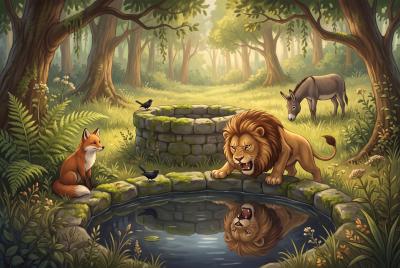
The Foolish Lion
Under a fig tree by a forest well, this fable turns on one proud lion and the quiet cleverness of smaller animals. The mood stays warm and steady, with only a brief flutter of suspense as the lion’s confidence carries him into trouble. The story holds its lesson lightly, showing wit and strength meeting without cruelty or fear. It settles into shared calm, with balance gently restored.
Open story -
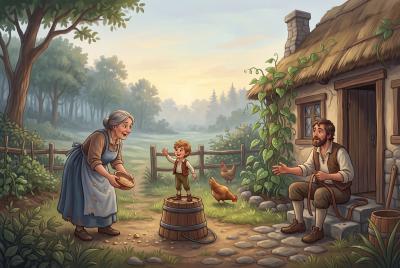
Tom Thumb
A tiny, playful adventure unfolds around Tom’s unusual size, with cottage warmth and old folktale rhythm holding everything steady. The mood stays bright and curious as small mishaps and clever escapes pass quickly without real fear. Brief suspense appears in a soft, storybook way, always contained by Tom’s wit and the sense that he is safe. It settles into home, comfort, and calm belonging.
Open story -

The Dog and His Reflection
A small, old fable about wanting a little more than one already has, set by a river at evening. The mood is calm and steady, with only a brief moment of mild suspense as the dog notices something in the water. The feeling stays gentle and matter-of-fact, turning a simple mistake into quiet reflection rather than upset. It settles into stillness, with the natural world helping the story feel contained and safe.
Open story -
More to discover
Softly paced tales made for 1-year-old listeners.
Questions parents often ask
A few of the things worth knowing about bedtime stories at this age.
Sources & research notes
- American Academy of Pediatrics — Literacy Promotion — Guidance on shared reading from birth, early literacy, attachment, language-rich interaction, and the role of print books in early childhood.
- HealthyChildren.org — Shared Reading Starting at Birth Offers Lifelong Benefits — Parent-friendly guidance on reading aloud with babies, building connection through shared reading, and making books part of everyday family routines.
- HealthyChildren.org — How to Share Books with Your 12 to 14 Month Old — Practical guidance on early book sharing, including pointing to pictures, naming familiar things, imitating sounds, and keeping reading moments short and calm.
- HealthyChildren.org — How to Share Books with Your 15 to 17 Month Old — Guidance on how toddlers around this age choose books, look at favorite pictures, make sounds, point to animals, and stay with a book for a few quiet minutes.
- HealthyChildren.org — Brush, Book, Bed — Guidance on using books as part of a simple, predictable bedtime routine.
- Mundy et al. — Development of Joint Attention in Infancy — Research background on joint attention in infancy and its connection with early social communication and later language development.
These sources helped shape the developmental guidance on this page. Fiabalo stories are designed for calm bedtime moments, not as medical or developmental advice. Every child grows at their own pace. If you have concerns about your child’s sleep, development, or wellbeing, speak with a pediatrician or qualified professional.
Not quite the right age?
Age is only a guide. If your child needs something simpler or is ready for a little more, choose the stage that feels closest right now.
Tonight's story is ready
Calm bedtime stories for 1-year-olds — short, gentle, and shaped for the age where voice, rhythm, and closeness matter most.
7-day free trial · No credit card required