Bedtime Stories for 14-Year-Olds
At fourteen, many children are moving deeper into the teen years. Strong peer influence, digital health, school stress, self-esteem, worries that can linger, and growing independence are all central parts of this stage. Ages 14 to 17 are a period when puberty-related changes continue, interest in romantic and sexual relationships grows, and teens become more able to think abstractly and consider the bigger picture. Bedtime stories work especially well here when they feel substantial enough for a teen who wants a real story, but still calm enough to help the day settle.
Reading together can still matter at this age. Talking about the story and asking questions like "What do you think will happen next?" keeps bedtime connected. Sleep guidance for teens recommends 8 to 10 hours of sleep each night and turning screens off at least 60 minutes before bedtime.
7-day free trial · No credit card required
What a good bedtime story feels like at fourteen
For a fourteen-year-old, a bedtime story can carry a little more inner tension than before. A fox loses a lantern, follows the glow of distant windows, makes one wrong turn, notices what he missed earlier, and finds his way home just as the whole garden goes quiet. A rabbit feels left out, says nothing for too long, finally speaks, and ends the night feeling safely included. A little bear insists he is not tired, then slowly softens into the stillness of the evening. There is a beginning, a stronger thread, and an ending that feels earned.
What makes it work at this age is not bigger intensity. It is a story with enough shape to feel rewarding, enough emotional clarity to feel meaningful, and an ending that lets the whole day settle.
What Fourteen-Year-Olds Bring to Story Time
At fourteen, many teens are bringing more privacy, more peer awareness, and more of the outside world into bedtime. At this age, friend groups become a strong influence, digital health matters, and checkups often include questions about school, big life changes, self-esteem, fears, worries, online time, sleep, mental health, and safety.
More reflection
A fourteen-year-old is more likely to think about what a character felt, why they chose something, and what that choice says about them.
More sensitivity to social meaning
Friend groups, appearance, fairness, reputation, boundaries, and pressure from other people can carry more emotional weight at this age.
More independence
Many teens this age want more space to sort things out internally, even while still needing connection. Many 14-year-olds prefer to meet with the pediatrician on their own.
A calm finish
Even with a fuller story, bedtime still works best when the ending lowers the energy of the room.
What Kind of Stories Work Best
The best bedtime stories for 14-year-olds usually have one clear plot, one emotional thread that is easy to follow, and a resolution that feels complete. This is a strong age for stories that feel like a true arc: something matters, something gets in the way, a small effort is made, and the story lands somewhere safe.
Because teens this age are often thinking more about identity, relationships, appearance, pressure, and how they are seen by others, bedtime stories can carry a little more emotional and social meaning than they could at thirteen. That does not mean bedtime needs bigger stakes. It means the story can hold a little more depth while still staying emotionally safe.
This is also a strong age for stories that feel immersive without becoming overstimulating. A lantern-lit room, a moonlit village, a quiet animal household, a forest path under the stars, a friend waiting at the window — these can all feel rich now, as long as the story ends in warmth and rest.
What Changes Between Thirteen and Fourteen
At thirteen, many teens are already carrying peer pressure, privacy, and emotional intensity into bedtime. At fourteen, that inner world often becomes even more socially shaped. HealthyChildren's 14-year guidance says friends become a strong influence, digital life needs active boundaries, many teens feel curiosity around sex, love, and desire, and doctors may ask directly about worries, sadness, anxiety, anger, sleep, substances, sex, and whether the teen has a trusted adult for support.
That changes what feels satisfying at bedtime. A story for a fourteen-year-old can carry a little more emotional and social meaning than a story for a thirteen-year-old, not because bedtime should get heavier, but because the teen can now enjoy more reflection inside the story.
Peer pressure may peak at this age
HealthyChildren's adolescence guidance says that during middle adolescence — roughly ages 14 to 17 — peer pressure may peak. Teens spend more time with friends and less with family, care intensely about how they appear to others, and may find that strong emotions drive their decisions even when they can reason through the logic of a situation more clearly than before.
That is one reason stories about pressure, belonging, saying no, staying true to yourself, or finding a steadier way through can land especially well now. A fourteen-year-old is not just following what a character does. They are paying attention to whether the character held their ground, gave in, or found a way through that felt honest.
Relationships and boundaries start to matter more
Friend groups are a strong influence at this age and that many 14-year-olds feel curious about sex, love, and desire. It also emphasizes conversations about body autonomy and consent.
For bedtime stories, that matters in a practical way. Stories about pressure, belonging, saying no, staying true to yourself, or finding a steadier way through can land especially well now.
Abstract thinking grows, but emotions still run ahead
Teens ages 14 to 17 become more able to think abstractly and consider the big picture, but may still struggle to apply that thinking in the moment.
That is one reason stories with clear emotional logic work so well at this age. A fourteen-year-old can appreciate nuance, mixed feelings, and a character who has to choose carefully — but bedtime still works best when the story resolves into something emotionally settled.
Digital life can follow them into the evening
Digital health is a major issue at this age, and family media limits and shared rules can help. Sleep guidance also recommends turning off screens at least an hour before bedtime.
That does not mean bedtime stories need to talk directly about apps or phones. It means stories that feel calm, grounded, and emotionally clear can help counterbalance a day that may already have felt noisy, social, and hard to switch off.
What that means for the stories you choose
A good bedtime story for a fourteen-year-old often has a beginning, a middle, and an ending that feels emotionally complete. Something happens. A feeling deepens. A small choice matters. Then the story lands softly.
Think: a young owl promises to carry one tiny lantern home through the woods. The wind rises, the path turns, the light flickers, and she keeps going until she reaches the stillest branch in the tree. That is enough. The plot feels real, the feeling is easy to follow, and the ending helps the evening settle.
Why repetition still matters at this age
Repetition still helps at fourteen, but now it often brings comfort through familiarity, memory, and emotional certainty. A favorite story does not only feel good because it is known. It feels good because the teen knows exactly where it will land.
That is why familiar bedtime stories can still work beautifully at this age. A story that ends in the same good place every time can be exactly what a teen needs at the end of a full day.
A calmer evening
Make tonight easier.
A gentle story shaped for fourteen-year-olds — meaningful enough to satisfy, calm enough to help the day end well.
Start free trial7-day free trial · No credit card required
Story Pacing for Fourteen-Year-Olds
The AAP recommends at least 15 minutes of reading aloud together each day as part of the bedtime routine, and specifically encourages reading before bedtime as quality time together. Sleep guidance recommends 8 to 10 hours of sleep each night for teens, turning off all screens at least 60 minutes before bedtime, and keeping routines predictable enough to ease bedtime stress.
At fourteen, that often means one fuller gentle story or two shorter ones, with enough space for one or two questions, a repeated line, and a slow ending. Stories with a clear, settled close tend to work better than anything that leaves feelings unresolved or energy raised. A teen who has spent the day managing schoolwork, friendships, comparison, screens, and growing independence often needs bedtime to feel like a soft landing — not more input.
Long enough to feel complete
A fourteen-year-old can often enjoy a richer bedtime story arc when it stays emotionally clear and calm.
Clear enough to follow
A connected sequence helps the story feel satisfying instead of overstimulating.
Soft enough for sleep
Even a fuller story still needs to bring the energy of the room down, not raise it.
At fourteen, the best bedtime story often feels like a real story with a soft landing.
Bedtime Story Themes That Work at Fourteen
Themes that work especially well at fourteen often combine fuller plot with feelings and situations that match a teen's growing world.
Friendship and belonging
A character notices, includes, returns, or makes room for someone else.
Fairness and values
A teen this age often cares more about what is fair, what is kind, and what feels right.
Confidence and self-respect
Stories where a character keeps going, finds their strength, or values what makes them unique.
Making a mistake and recovering
A character gets something wrong, feels it, and still arrives somewhere good.
Pressure and staying steady
A character feels pushed by comparison, expectations, or peer pressure and still finds a calmer, truer way forward.
Soft adventure
A small journey, a clear goal, a calm return.
Feelings that resolve clearly
Worry, embarrassment, loneliness, frustration, pride, or hesitation that gently settles by the end.
Why Parents Choose Fiabalo for 14-Year-Olds
Parents of fourteen-year-olds are often balancing two bedtime needs at once: a teen who wants a richer story and a day that may already feel full of school, friendships, comparison, screens, and stimulation. That is exactly where the right story matters.
The AAP links shared reading to stronger parent-child attachment, early brain development, and the foundations of language and literacy — and specifically encourages bedtime reading as quality time together at the end of the day.
Made for calmer evenings
Fiabalo stories are designed to guide the day downward, not wake it back up.
A better fit for this stage
More continuity, more meaning, still gentle enough for bedtime.
Read together or press play
Some evenings invite questions and shared reading. Others need something soft and ready.
Less bedtime friction
One calm story, already suited to the moment, helps reduce decision-making when everyone is tired.
At fourteen, bedtime often works best when the story feels both meaningful and restful. Fiabalo helps make space for both.
Ready to settle down
Stories shaped for 14-year-olds
Bedtime stories gently adapted for this age, with richer plots, emotional depth, and calm endings.
-
 5 chapters
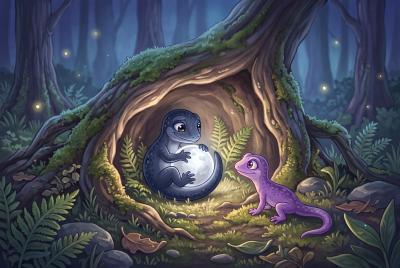
Lili and the Shadow Lizard
A hushed forest atmosphere carries this story through themes of absence, belonging, and the careful making of trust. Its emotions are quiet and layered, moving through loneliness, caution, and gentle concern toward a steadier sense of closeness. Tension remains low throughout, shaped by uncertainty, sensitivity, and the wish to make room for difference rather than by danger. It offers a reflective bedtime experience, settling into warmth, patience, and calm without forcing complete reassurance.
Open story -
 6 chapters
Lili the Lizard
Across the story, small nighttime disturbances unfold in meadows, caves, ponds, and dreamlike spaces, giving the story a hushed, attentive rhythm. The emotional arc moves through brief fear, uncertainty, and hesitation, but each moment is met with patience, observation, and steadiness rather than force. Tension stays mild and close, shaped by delicate physical problems and symbolic feelings of things being slightly out of place. It offers a reflective, calming experience that repeatedly returns to shelter, clarity, and quiet belonging.
Open story -
 6 chapters
Jungle Tales
Watchful dusk, cave life, and the nearness of the jungle give this serial a steady, alert atmosphere shaped more by attention than fear. Across the chapters, small disturbances, misunderstandings, and monkey-made disorder create moderate tension without tipping into danger. The emotional movement leans on trust, patience, and the effort to read signs clearly, with reflective pauses between moments of unease. It offers a grounded, thoughtful experience that repeatedly returns to calm, belonging, and restored order.
Open story -

The Town Musicians of Bremen
An old sense of being set aside gives this tale its first note, but it quickly turns toward companionship, purpose, and dry humor. The mood stays warm and steady as four mismatched animals gather on the road and discover strength in sounding together. Tension is mild, carried through a playful forest-house encounter rather than real danger. It settles into belonging and shelter, with a calm, satisfying pause rather than urgency.
Open story -

The Snow Queen
A close childhood bond is tested by a quiet, symbolic coldness that enters ordinary life and turns warmth distant. The mood is wintry and reflective, with longing, steadiness, and a strong thread of devotion rather than fear. Tension stays gentle but persistent as the story moves through a series of memorable encounters and strange, mythic places. It settles into warmth and recognition, offering emotional release without spectacle.
Open story -

The Dog and His Reflection
A familiar Aesop shape, this story holds a small moment of wanting against the stillness of evening water. The mood is calm and reflective, with only mild suspense as a simple mistake gathers quiet consequence. Greed is treated gently, more as a passing impulse than a flaw, and the loss feels natural rather than harsh. It settles into a subdued, steady pause, leaving room for thought rather than strong reassurance.
Open story -
More to discover
Softly paced tales made for 14-year-old listeners.
Questions parents often ask
A few of the things worth knowing about bedtime stories at this age.
Sources & research notes
- HealthyChildren.org — Your Checkup Checklist: 14 Years Old — Background on fourteen-year-old development, including peer influence, digital life, school pressure, self-esteem, sleep, and growing independence.
- HealthyChildren.org — Stages of Adolescence — Guidance on middle adolescence, including peer influence, abstract thinking, independence, relationships, emotions, and identity.
- HealthyChildren.org — Kids & Screen Time: The 5 C’s for Young Teens — Guidance on digital life for ages 10 to 14, including independence, identity, peer relationships, online habits, and family connection.
- HealthyChildren.org — 10 Tips to Help Your Child Fall in Love with Reading — Guidance on reading together before bedtime, discussing stories, asking what might happen next, and keeping reading connected to family time.
- HealthyChildren.org — Sleep: How Many Hours Does Your Child Need? — Guidance on teen sleep needs, screen-free wind-down time, and predictable bedtime routines that support rest.
- HealthyChildren.org — Books to Build Character & Teach Important Values — Guidance on how stories and books can support conversations about kindness, values, character, and emotional growth.
These sources helped shape the developmental guidance on this page. Fiabalo stories are designed for calm bedtime moments, not as medical or developmental advice. Every child grows at their own pace. If you have concerns about your child’s sleep, development, or wellbeing, speak with a pediatrician or qualified professional.
Not quite the right age?
Age is only a guide. If your child needs something simpler or is ready for a little more, choose the stage that feels closest right now.
Tonight's story is ready
Calm bedtime stories for 14-year-olds — gentle enough for sleep, full enough to feel satisfying after a bigger day.
7-day free trial · No credit card required