Bedtime Stories for 3-Year-Olds
At three, many children are talking more, asking more, and joining in more. They can keep a short back-and-forth conversation going, describe what is happening in a picture, and ask "who," "what," "where," or "why" with genuine curiosity. Bedtime stories work especially well at this age when they still feel calm — but now also give a child something small to follow, notice, and respond to.
This is often the age when story time becomes more interactive. A three-year-old may name a favorite book, repeat a line before you do, or tell you what a character is doing on the page. That makes bedtime stories feel less like something being read at them and more like something you move through together.
7-day free trial · No credit card required
What a good bedtime story feels like at three
For a three-year-old, a bedtime story can carry a little more shape. A fox loses his scarf and looks in three places before finding it. A sleepy rabbit feels unsure about the dark, then settles when the room grows quiet. A little bear wants one more game, then slowly says goodnight. There is a beginning, a small feeling, and a calm ending — and that is often enough.
What makes a story work at this age is not excitement. It is a simple sequence, familiar emotions, and the comfort of knowing everything will settle before the last line.
What Three-Year-Olds Bring to Story Time
At three, many children are not only listening to stories — they are starting to participate in them. CDC milestones for age three include keeping a conversation going with at least two back-and-forth exchanges, asking "who," "what," "where," or "why" questions, and describing what action is happening in a picture or book. Many children this age also begin to name the books they want and may pretend to read a familiar story aloud from memory — recalling lines, turning pages at the right moment, and sometimes correcting you if you skip a word.
More conversation
A three-year-old is more likely to comment, ask, answer, and stay with you inside the story.
Clear action
Stories with visible action are easier to follow: looking, finding, waiting, helping, carrying, hiding, returning.
Feelings they can name
At this age, simple emotional language starts to matter more. Happy, worried, lonely, sleepy, proud, sad — these are feelings a child can begin to connect with and recognize in a character.
A calm finish
Even with a little more plot, bedtime stories still work best when they end in safety, warmth, and closure.
What Kind of Stories Work Best
The best bedtime stories for 3-year-olds usually have one clear situation, one simple emotional thread, and one gentle resolution. This age can often handle more than a younger toddler, but bedtime is still not the moment for fast pacing, big twists, or loud energy.
Many three-year-olds enjoy stories that let them notice what happens next. One character wants something. Something small goes wrong. Someone waits, helps, finds, or understands. Then the story lands softly. That structure fits well with how children this age follow actions in books and respond to simple questions about what they see.
Because many children at three ask "who," "what," "where," or "why," bedtime stories for this age also benefit from clear cause and effect — not complicated lessons, just a story world that makes sense. A scarf was lost, so it is searched for. A friend feels left out, so someone notices. A room feels too busy, so everything grows quieter.
Every child grows in their own way
Milestones are only gentle guides. Some children reach them early, some later, and many grow in small uneven steps. What matters most is meeting your child with patience, warmth, and trust in their own rhythm.
What Changes Between Two and Three
At two, many children are in the middle of a big language shift. By three, that growth is often much more visible in daily life. Three-year-olds are using longer phrases, asking more questions, and talking clearly enough that story time becomes more interactive than it was before.
That shift changes what a child brings to bedtime. At two, the story is something a child absorbs. At three, it becomes something a child begins to engage with — following the thread, anticipating a repeated line, noticing when something feels wrong or right in the story world.
Understanding feelings starts to deepen at this age
Around age three, children begin to grasp more clearly that other people can want, like, and feel things differently from them, and that understanding keeps developing through the preschool years.
For bedtime stories, that means something shifts. A rabbit who feels unsure in the dark is no longer just someone moving through the scene — she is someone a child can begin to understand, stay with, and gently root for.
That is one reason bedtime stories at this age can carry a little more emotional shape. A clear feeling, a small moment of uncertainty, and a calm resolution often land more deeply than they did before.
Pretend reading as part of story time
Around age three, many children start to "read" a favorite story back to you from memory — turning pages in the right places, repeating familiar lines, or filling in what comes next. This is part of emergent literacy: the child is beginning to internalize the shape of a story, the rhythm of written language, and the connection between pictures and meaning.
Letting a child join in, finish a line, or tell you what comes next can make story time feel more shared — and it quietly supports the reading skills they are building, one familiar story at a time.
What that means for the stories you choose
A good bedtime story for a three-year-old often has a beginning, a middle, and an ending you can feel. Something happens. A feeling appears. A small shift follows. Then the world settles again.
Think: a small owl cannot find the quietest branch to sleep on. She tries one branch, then another, then one more. At last she finds the softest, stillest place in the tree and tucks in her wings. That is enough story for bedtime at three — simple enough to follow easily, shaped enough to feel complete.
Why repetition still matters at this age
Repetition still matters at three — but it starts to do more than comfort. It also creates participation.
A repeated phrase gives a child the chance to join in. A familiar page gives them the pleasure of knowing what comes next and the satisfaction of being right. The same story night after night can still be exactly right, especially when a child is beginning to recognize patterns, words, and actions more actively. At three, knowing a story well enough to "read" it back to you is something worth encouraging — not a sign that it is time to move on.
A calmer evening
Make tonight easier.
A short, gentle story shaped for three-year-olds — chosen for you, so bedtime can begin without another decision.
Start free trial7-day free trial · No credit card required
Story Pacing for Three-Year-Olds
The AAP's Brush, Book, Bed program recommends at least 15 minutes of reading aloud together each day as part of the bedtime routine. At three, that time tends to feel fuller than it did at two — there is more back-and-forth, more questions, and more pausing on a favorite page.
One thing that changes noticeably at this age is bedtime stalling. Three-year-olds are often the first to ask for "just one more book" — not because they are not tired, but because they have learned that the story delays the goodbye. Setting a clear expectation before you start — two stories, then lights out — and choosing stories with calm, definite endings tends to work better than letting the evening drift. At bedtime, the story works best when it helps the evening settle, not stretch on.
Long enough to follow
A three-year-old can often enjoy a fuller story arc, as long as it stays simple and calm.
Clear enough to retell
If a child can tell you a small piece of what happened, the story is usually landing well.
Soft enough for bedtime
Even a good story at this age still needs to lower the energy of the room, not raise it.
At three, the best bedtime story often feels like a small journey that ends exactly where a child needs to be: safe, settled, and ready for sleep.
Bedtime Story Themes That Work at Three
Themes that work especially well at three usually combine something familiar with one small emotional or social moment. This is the age where stories can start helping a child recognize not just objects and routines, but also feelings, choices, and gentle problem-solving.
Friendship
A character waits, helps, shares, or comes back for someone. Simple social moments land clearly at this age.
Small worries
A little fear, hesitation, or uncertainty that settles safely — without drama or resolution that feels too easy. Fear of the dark, fear of a new place, fear of being left out all work well at three.
Bedtime transitions
One more game, one more cuddle, one more light — and then goodnight. Three-year-olds recognize the stalling; a story that names it gently can help.
Lost and found
Still a strong theme at this age, especially when the emotional payoff is recognition and relief rather than just location.
Gentle imagination
A moonlit garden, a sleepy forest path, a rabbit with a lantern — enough imagination to hold attention, never enough to overstimulate.
Feelings with names
Stories that gently name emotions help three-year-olds connect inner experience with language — something this age is actively learning to do.
Why Parents Choose Fiabalo for Three-Year-Olds
Parents of three-year-olds are often managing a new kind of bedtime: a child who has more words, more opinions, more questions, and sometimes more resistance. That is exactly why the right story matters.
Shared reading supports language, early literacy, social-emotional development, and the parent-child bond. For preschoolers, books at night are not just a nice extra — they are often one of the easiest ways to reconnect after a long day, slow the evening down, and guide a child toward sleep without a struggle.
Made for calmer evenings
Fiabalo stories are designed to guide the energy of the day downward, not restart it.
A better fit for this stage
More story shape for this stage, still gentle enough for bedtime.
Read together or press play
Some evenings invite conversation. Others call for something soft and ready. Fiabalo supports both.
Less bedtime friction
One calm story, already suited to the moment, helps reduce decision-making when everyone is tired.
At three, children often want bedtime to feel both connecting and a little interactive. Fiabalo helps make space for that — without turning the evening back into something busy.
Ready to settle down
Stories shaped for 3-year-olds
Bedtime stories gently adapted for this age, with simple action, clear feelings, and soft endings.
-
 5 chapters
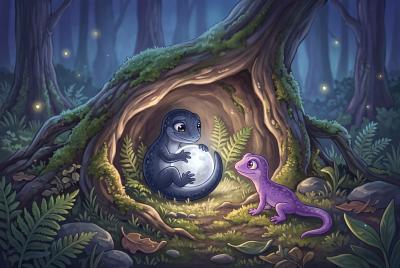
Lili and the Shadow Lizard
A softly paced nighttime story, this series stays close to small shifts in light, space, and comfort as two lizards learn how to share the forest gently. The emotional movement is warm and steady, with brief moments of hesitation that are quickly softened by patience, closeness, and trust. Tension remains very low throughout, shaped more by watchfulness and adjustment than by worry. It offers a contained, soothing bedtime experience and repeatedly returns to calm, belonging, and rest.
Open story -
 6 chapters
Jungle Tales
Across the story, small jungle puzzles and bits of monkey mischief create gentle movement without real danger. The mood stays warm, watchful, and close, with familiar companions, dusk light, water, rocks, and the cave giving each part a steady sense of safety. Brief moments of worry or confusion appear, but they are always softened quickly by patience, guidance, and togetherness. It offers a calm bedtime rhythm of noticing, searching, and returning to reassurance, settling again and again into trust and order.
Open story -
 6 chapters
Lili the Lizard
Across the story, small nighttime disturbances arise in sheltered places and are met with careful noticing, patience, and calm help. The emotional tone stays warm and steady, moving from brief fluttery uncertainty into trust, order, and rest. Tension remains very light throughout, with each moment held gently and never allowed to grow overwhelming. The overall experience is soothing and contained, settling again and again into quiet belonging and bedtime calm.
Open story -

The Selfish Giant
A walled garden and a waiting spring shape this gentle, symbolic story. The feeling moves from quiet stillness into warmth and welcome, with only a very soft sense of distance along the way. The tension stays low, held in images of winter and closed gates rather than fear. It settles into kindness, belonging, and deep peace.
Open story -

About Three Pennies
A modest folk tale of work, wit, and household wisdom, it stays calm from beginning to end. The mood is steady and thoughtful, with only a brief, gentle note of curiosity as a king lingers over a young man’s unusual answer. Its central pleasure is the clear, symbolic meaning of the three pennies and the quiet respect it earns. The story settles into warmth, order, and a sense of life being held fairly.
Open story -

The Little Match Girl
A winter-night tale held between outward cold and inward light, this story moves through small, glowing moments of comfort. Its feelings are soft and wistful rather than frightening, with only the gentlest sense of want and longing. The repeated match flames create a calm, rhythmic pattern, and the grandmother’s presence gives the story warmth and tenderness. It settles into stillness and quiet transcendence, with sadness kept distant and serene.
Open story -
More to discover
Softly paced tales made for 3-year-old listeners.
Questions parents often ask
A few practical answers about story length, bedtime questions, calming themes, and what works best at this age.
Sources & research notes
- American Academy of Pediatrics — Literacy Promotion — Guidance on shared reading, early literacy, attachment, language-rich interaction, and the role of books in early childhood development.
- HealthyChildren.org — Shared Reading Starting at Birth Offers Lifelong Benefits — Parent-friendly guidance on reading aloud with young children, supporting language development, and building connection through shared reading.
- CDC — Milestones by 3 Years — Developmental milestone guidance for three-year-olds, including conversation, asking questions, and describing actions in pictures or books.
- HealthyChildren.org — How to Share Books with Children 2 and 3 Years Old — Practical guidance on sharing books with toddlers and preschoolers, including repeated reading, questions, favorite books, and bedtime book routines.
- Child Encyclopedia — Theory of Mind in Early Childhood — Background on how young children begin to understand that other people can have their own thoughts, wants, motives, and feelings.
- HealthyChildren.org — Brush, Book, Bed — Guidance on using books as part of a simple, predictable bedtime routine.
These sources helped shape the developmental guidance on this page. Fiabalo stories are designed for calm bedtime moments, not as medical or developmental advice. Every child grows at their own pace. If you have concerns about your child’s sleep, development, or wellbeing, speak with a pediatrician or qualified professional.
Not quite the right age?
Age is only a guide. If your child needs something simpler or is ready for a little more, choose the stage that feels closest right now.
Tonight's story is ready
Calm bedtime stories for 3-year-olds — gentle enough for sleep, rich enough to hold a curious little mind.
7-day free trial · No credit card required