Bedtime Stories for 5-Year-Olds
At five, many children are ready for stories that feel fuller and more connected. Many children this age can tell a story they heard or made up with at least two events, answer simple questions about a book after you read it, keep a conversation going with more than three back-and-forth exchanges, and stay with story time longer than they could before.
This is also the age when bedtime can feel like a negotiation. A five-year-old often wants a real story, one more question, one more reason to stay up a little longer. Bedtime stories work especially well here when they feel satisfying enough to hold attention, but calm enough to help the whole evening settle.
7-day free trial · No credit card required
What a good bedtime story feels like at five
For a five-year-old, a bedtime story can hold a little more than before. A fox loses a lantern, follows the glow of three windows through the dark, and finds his way back just as the garden goes quiet. A rabbit feels left out, gets invited in, and ends the night feeling safely part of things. A little bear insists he is not tired, then slowly softens into the comfort of the evening. There is a beginning, a stronger thread, and a finish that feels complete.
What makes it work at this age is not bigger intensity. It is a story with enough shape to feel rewarding, enough emotional clarity to feel meaningful, and an ending that lets the whole day exhale.
What Five-Year-Olds Bring to Story Time
At five, many children are doing more than listening and predicting. CDC milestones for age five include telling a story heard or made up with at least two events, answering simple questions about a book after hearing it, and keeping a conversation going with more than three back-and-forth exchanges. Many children this age can also pay attention for five to ten minutes during activities like story time — which means a fuller bedtime story can now hold their attention in a way it could not before.
More story memory
A five-year-old is more likely to hold onto what happened earlier and enjoy seeing it connect to what comes later.
Longer attention
CDC milestones note that many children this age can pay attention for five to ten minutes during activities — long enough for a fuller bedtime story arc.
Deeper questions
At this age, questions often move beyond what is happening into why it is happening.
A calm finish
Even with a fuller story, bedtime still works best when the ending brings the room down into rest.
What Kind of Stories Work Best
The best bedtime stories for 5-year-olds usually have one clear plot, one emotional thread that is easy to follow, and a resolution that feels complete. This is a strong age for stories that feel more like a true journey: something happens, a character responds, a small effort is made, and the story lands somewhere safe.
Because many children at five can answer simple questions about a story and tell back a short story of their own, bedtime stories at this age can hold more continuity than they could before. A character can have a goal. A small problem can unfold over a few steps. A feeling can deepen and then settle. That gives a five-year-old something satisfying to follow without turning bedtime into an overly stimulating experience.
This is also a great age for stories that feel a little richer in atmosphere. A moonlit village, a sleeping forest path, a lantern-lit room, a quiet animal household — these can all feel immersive now, as long as the story stays emotionally safe and ends in calm.
Every child grows in their own way
Milestones are only gentle guides. Some children reach them early, some later, and many grow in small uneven steps. What matters most is meeting your child with patience, warmth, and trust in their own rhythm.
What Changes Between Four and Five
At four, many children are enjoying clear story sequence and imaginative atmosphere. At five, many are ready for a little more continuity, a little more story memory, and a little more meaning inside the arc.
That changes what feels satisfying at bedtime. A story for a five-year-old can carry more shape than a story for a four-year-old, not because the evening should get louder, but because the child can now enjoy more connectedness inside the story.
Story coherence becomes more satisfying
By five, many children can tell back a short story, answer simple questions about what they heard, and hold onto a thread across more than one moment. That means bedtime stories can now feel more coherent from start to finish: not just one moment after another, but a small whole.
A good bedtime story for a five-year-old often works because each part adds to the next. Something is wanted. Something gets in the way. A small effort follows. A gentle resolution arrives. The story feels complete when it ends.
How stories are starting to build reading readiness
Around age five, something important is happening in the background: children are beginning to develop phonological awareness — the ability to hear that words are made up of distinct sounds and patterns. CDC milestones for this age include using and recognizing simple rhymes, which is one of the earliest and most reliable signs of phonological awareness developing. Research consistently identifies phonological awareness as one of the strongest predictors of later reading success.
Bedtime stories contribute to this directly. Stories with rhythm, repetition, and rhyme — phrases that come back, words that sound like other words, lines that have a musical shape — give children repeated exposure to the sound patterns of language. That is not incidental. It is part of why reading together at this age, done calmly and consistently, supports the foundations a child will draw on when they begin to read formally.
This does not mean bedtime needs to become a phonics lesson. It means a good bedtime story is doing more than entertaining. It is building something that matters.
Conversation around the story gets richer
At five, the conversation around stories often gets deeper too. Questions can move beyond what is happening into why it is happening, why a character felt that way, or what might happen next.
That does not mean bedtime needs a long discussion every night. It just means the story can now carry slightly more reflection and still feel age-right.
What that means for the stories you choose
A good bedtime story for a five-year-old often has a beginning, a middle, and an ending that feels emotionally complete. Something happens. A feeling develops. A small effort changes things. Then the story lands softly.
Think: a young owl promises to carry one tiny lantern home through the woods. The wind rises, the path turns, the light flickers, and she keeps going until she reaches the stillest branch in the tree. That is enough. The plot feels real, the feeling is easy to follow, and the ending helps the evening settle.
Why repetition still matters at this age
Repetition still helps at five, but now it often brings pleasure through memory, mastery, and anticipation. A repeated line becomes something a child knows by heart. A familiar story becomes something they can follow from beginning to end without effort.
That is why favorite bedtime stories can still work beautifully at this age. Familiarity can be just as soothing as novelty, especially at the end of the day.
A calmer evening
Make tonight easier.
A gentle story shaped for five-year-olds — full enough to feel satisfying, calm enough to help the day end well.
Start free trial7-day free trial · No credit card required
Story Pacing for Five-Year-Olds
The AAP recommends at least 15 minutes of reading aloud together each day as part of the bedtime routine. At five, that time often works well as one fuller gentle story or two shorter ones, with enough space for a few questions, a repeated line, and a slow ending. CDC milestones note that many five-year-olds can pay attention for five to ten minutes during activities — which means a well-paced bedtime story fits naturally within that window.
For families where a child has recently started school, bedtime stories often carry extra weight at this age. A long day away from home — with new demands, new social situations, and a lot of input to process — means many five-year-olds arrive at bedtime more emotionally full than they look. A calm, familiar story is not just a routine at this stage. It is often one of the most effective ways to help a child decompress, reconnect, and settle into sleep. On harder evenings, a shorter story with a warm ending tends to work better than a longer one that risks reopening the day.
Long enough to feel complete
A five-year-old can often enjoy a richer bedtime story arc when it stays emotionally clear and calm.
Clear enough to follow
A connected sequence helps the story feel satisfying instead of overstimulating.
Soft enough for sleep
Even a fuller story still needs to lower the energy of the room, not raise it.
At five, the best bedtime story often feels like a real story with a soft landing.
Bedtime Story Themes That Work at Five
Themes that work especially well at five often combine fuller plot with feelings a child can still easily understand.
Gentle adventure
A small journey, a clear goal, a calm return.
Friendship and belonging
A character notices, includes, helps, or comes back for someone.
Small bravery
Not danger for its own sake — just one manageable challenge that settles safely.
Responsibility and independence
A child this age often enjoys stories where a character tries to do something on their own and grows through it.
Soft magic
Lanterns, moonlight, glowing paths, quiet animal homes, sleepy skies.
Feelings that resolve clearly
Worry, frustration, excitement, loneliness, pride, or hesitation that gently settles by the end.
Why Parents Choose Fiabalo for 5-Year-Olds
Parents of five-year-olds are often balancing two bedtime needs at once: a child who wants more story, and an evening that still needs to end peacefully. That is exactly where the right story matters.
Shared reading supports language, literacy, emotional development, and the parent-child bond. For a five-year-old, that often means a story that feels rich enough to matter and calm enough to help the day end well.
Made for calmer evenings
Fiabalo stories are designed to guide the day downward, not wake it back up.
A better fit for this stage
More plot, more continuity, still gentle enough for bedtime.
Read together or press play
Some evenings invite questions and shared reading. Others need something soft and ready.
Less bedtime friction
One calm story, already suited to the moment, helps reduce decision-making when everyone is tired.
At five, bedtime often works best when the story feels both meaningful and restful. Fiabalo helps make space for both.
Ready to settle down
Stories shaped for 5-year-olds
Bedtime stories gently adapted for this age, with fuller plots, clear feelings, and calm endings.
-
 5 chapters
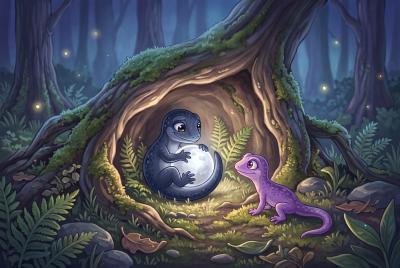
Lili and the Shadow Lizard
A moonlit forest and a small sense of something missing shape this story’s gentle beginning. Across the chapters, it moves through loneliness, shyness, and sensory discomfort with light, carefully held tension that never becomes frightening. The heart of the story is quiet companionship, as patience and attention make room for difference. It offers a calm bedtime experience with soft nighttime imagery, and it generally settles into warmth, belonging, and restored rhythm.
Open story -
 6 chapters
Lili the Lizard
Across the story, small nighttime troubles unfold in gardens, caves, ponds, and other softly imagined places, with Lili meeting each one through patience and careful attention. The emotional tone stays gentle and reassuring, moving through brief worry, uncertainty, and hesitation without ever becoming frightening. Tension remains light and easy to follow, shaped by listening, noticing, and waiting rather than danger. It offers a calm bedtime rhythm, with each part returning to safety, order, and quiet belonging.
Open story -
 6 chapters
Jungle Tales
Evening unease, small misunderstandings, and jungle noises shape this story into a gentle sequence of brief uncertainties. Across the chapters, watchfulness, curiosity, and trust matter more than danger, and the tension stays light and quickly contained. The emotional rhythm moves from mild disorder or confusion back toward clarity, closeness, and reassurance. It offers a calm bedtime experience, with each part returning the jungle to a more settled, knowable feeling.
Open story -
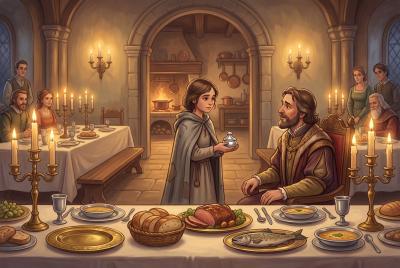
Salt over Gold
A quiet misunderstanding sits at the heart of this old royal tale, where plain truth is mistaken for something small. The mood is reflective and gentle, with only light tension as distance and hurt briefly enter the story. Everyday details of bread, kitchens, and seasoning give it a grounded, symbolic warmth. It settles into recognition and restored closeness, leaving a calm sense of order and reassurance.
Open story -

The Wolf and the Fox
A traditional animal tale sets strength beside quick wit, with the wolf and fox moving through a wintry fairy-tale world. The mood is crisp, playful, and lightly sly, with repeating patterns that make the fox’s cleverness easy to follow. Tension stays mild, coming from the wolf’s poor choices and small moments of trouble rather than anything frightening. It settles into quiet distance and clear balance, with order gently restored.
Open story -

The Wolf in Sheep's Clothing
A calm hillside setting holds a simple tale of disguise, watchfulness, and belonging. The mood is gentle and pastoral, with only light suspense as something out of place moves quietly among the flock. The tension stays brief and clear rather than frightening, and the story treats deception as a visible mismatch that cannot hold for long. It settles back into order, familiarity, and safety.
Open story -
More to discover
Softly paced tales made for 5-year-old listeners.
Questions parents often ask
A few of the things worth knowing about bedtime stories at this age.
Sources & research notes
- American Academy of Pediatrics — Literacy Promotion — Guidance on shared reading, early literacy, attachment, language-rich interaction, and the role of books in childhood development.
- HealthyChildren.org — 10 Tips to Help Your Child Fall in Love with Reading — Guidance on reading together before bedtime, talking about stories, asking what might happen next, and keeping reading connected to family time.
- CDC — Milestones by 5 Years — Developmental milestone guidance for five-year-olds, including storytelling, answering questions about books, conversation, rhyming, and attention during activities.
- HealthyChildren.org — Your Checkup Checklist: 5 Years Old — Background on five-year-old development, including school, friendships, activities, happiness, and social-emotional growth.
- Reading Rockets — Phonological and Phonemic Awareness — Background on sound awareness as one of the early foundations that supports later reading.
- HealthyChildren.org — Brush, Book, Bed — Guidance on using books as part of a simple, predictable bedtime routine.
- HealthyChildren.org — Sleep: How Many Hours Does Your Child Need? — Guidance on healthy sleep needs, screen-free wind-down time, and predictable bedtime habits for children.
These sources helped shape the developmental guidance on this page. Fiabalo stories are designed for calm bedtime moments, not as medical or developmental advice. Every child grows at their own pace. If you have concerns about your child’s sleep, development, or wellbeing, speak with a pediatrician or qualified professional.
Not quite the right age?
Age is only a guide. If your child needs something simpler or is ready for a little more, choose the stage that feels closest right now.
Tonight's story is ready
Calm bedtime stories for 5-year-olds — gentle enough for sleep, full enough to feel deeply satisfying.
7-day free trial · No credit card required