Bedtime Stories for 8-Year-Olds
At eight, many children are ready for stories that feel richer, more thoughtful, and more complete from beginning to end. Children this age are starting to use logic and reason in new ways, get better at focusing on multiple parts of a problem at once, and place growing importance on peers and friendships. Bedtime stories work especially well here when they feel substantial enough for a child who wants a real story, but still calm enough to help the day settle.
Reading together still matters a lot at this age. Talking about the story and asking questions like "What do you think will happen next?" keeps bedtime connected. School-age children benefit from regular routines, and healthy sleep guidance recommends 9 to 12 hours of sleep each night for this age range.
7-day free trial · No credit card required
What a good bedtime story feels like at eight
For an eight-year-old, a bedtime story can carry a little more thought than before. A fox loses a lantern, follows the glow of distant windows, makes one wrong turn, solves one small problem, and finds his way home just as the whole garden goes quiet. A rabbit feels left out, decides to speak, and ends the night feeling safely included. A little bear insists he is not tired, then slowly softens into the stillness of the evening.
What makes it work at this age is not bigger intensity. It is a story with enough shape to feel rewarding, enough emotional clarity to feel meaningful, and an ending that lets the whole day settle.
What Eight-Year-Olds Bring to Story Time
At eight, many children are bringing more logic, more social awareness, and more of the outside world into bedtime. HealthyChildren's 8-year checkup guidance says children this age are using reason in new ways, focusing on more than one part of a problem at once, and caring more about peers, shared interests, and friendships.
More reflection
An eight-year-old is more likely to think about what a character felt, why something happened, and whether a choice made sense.
Longer story memory
Stories can now hold together across more scenes without losing the child.
A stronger peer world
Friendships, belonging, fairness, and difference often matter more at this age.
A calm finish
Even with a fuller story, bedtime still works best when the ending lowers the energy of the room.
What Kind of Stories Work Best
The best bedtime stories for 8-year-olds usually have one clear plot, one emotional thread that is easy to follow, and a resolution that feels complete. This is a strong age for stories that feel like a true arc: something matters, something gets in the way, a small effort is made, and the story lands somewhere safe.
Because children this age are often using more logic, handling more schoolwork, and making sense of a wider social world, bedtime stories can carry a little more continuity and thought than they could at seven. That does not mean bedtime needs bigger stakes. It means the story can hold a little more meaning while still staying emotionally safe.
This is also a strong age for stories that feel immersive without becoming overstimulating. A lantern-lit room, a moonlit village, a quiet animal household, a forest path under the stars, a friend waiting at the window — these can all feel rich now, as long as the story ends in warmth and rest.
Every child grows in their own way
Milestones are only gentle guides. Some children reach them early, some later, and many grow in small uneven steps. What matters most is meeting your child with patience, warmth, and trust in their own rhythm.
What Changes Between Seven and Eight
At seven, many children are carrying school, self-esteem, and growing independence into bedtime. At eight, many are also thinking more actively, reasoning through situations more clearly, and placing even more importance on peers and social belonging. Guidance for this age points directly to logic, problem-solving, widening friendship circles, and the normal conflicts that come from making sense of beliefs and practices different from their own family's.
That changes what feels satisfying at bedtime. A story for an eight-year-old can carry a little more thought and social meaning than a story for a seven-year-old, not because bedtime should get heavier, but because the child can now enjoy more reflection inside the story.
How stories start to work differently at this age
Around age seven or eight, children enter what researchers call concrete operational thinking — a stage where logical reasoning about real, observable things becomes much stronger. Many children begin to care more about whether a story's pieces fit together, whether a character's choice made sense, and whether the ending follows naturally from what came before.
That does not mean bedtime stories need to become puzzles. It means the internal logic of the story matters more now. A plot that holds together cleanly tends to feel more satisfying than one that resolves too quickly or too conveniently — and a child who notices a plot hole is not being difficult. They are applying exactly the kind of thinking that is developing strongly at this age.
Peer life starts shaping bedtime more
Peer groups become more and more important at this age, and children may begin to identify more with kids who share their interests. As their circle widens, they often encounter beliefs and practices different from their own family's, which can lead to normal conflict and more opportunities to practice reasoning and problem-solving.
That is one reason stories about friendship, belonging, fairness, difference, and quiet kindness often land especially well at eight. A calm bedtime story that ends with a character feeling included, understood, or quietly confident can offer reassurance in a softer form.
What that means for the stories you choose
A good bedtime story for an eight-year-old often has a beginning, a middle, and an ending that feels emotionally complete. Something happens. A feeling deepens. A small insight or choice matters. Then the story lands softly.
Think: a young owl promises to carry one tiny lantern home through the woods. The wind rises, the path turns, the light flickers, and she keeps going until she reaches the stillest branch in the tree. That is enough. The plot feels real, the meaning is easy to follow, and the ending helps the evening settle.
Why repetition still matters at this age
Repetition still helps at eight, but now it often brings comfort through familiarity, memory, and emotional certainty. A favorite story does not only feel good because it is known. It feels good because the child knows exactly where it will land.
That is why familiar bedtime stories can still work beautifully at this age. A story that ends in the same good place every time can be exactly what a school-age child needs at the end of a full day.
A calmer evening
Make tonight easier.
A gentle story shaped for eight-year-olds — meaningful enough to satisfy, calm enough to help the day end well.
Start free trial7-day free trial · No credit card required
Story Pacing for Eight-Year-Olds
The AAP recommends at least 15 minutes of reading aloud together each day as part of the bedtime routine, and specifically encourages reading before bedtime with school-age children. School-aged children generally need 9 to 12 hours of sleep each night — and at eight, homework, sports, after-school activities, and busier family schedules can all make it harder to protect that time. A consistent bedtime story is one of the simplest ways to create a clear signal that the evening is ending.
At eight, that often means one fuller gentle story or two shorter ones, with enough space for one or two questions, a repeated line, and a slow ending. Stories with a clear, settled close tend to work better than anything that leaves feelings unresolved or energy raised.
Long enough to feel complete
An eight-year-old can often enjoy a richer bedtime story arc when it stays emotionally clear and calm.
Clear enough to follow
A connected sequence helps the story feel satisfying instead of overstimulating.
Soft enough for sleep
Even a fuller story still needs to bring the energy of the room down, not raise it.
At eight, the best bedtime story often feels like a real story with a soft landing.
Bedtime Story Themes That Work at Eight
Themes that work especially well at eight often combine fuller plot with feelings and situations that match a child's growing world.
Friendship and belonging
A character notices, includes, returns, or makes room for someone else.
Fairness and different perspectives
A child this age often cares more about what is fair, what is kind, and why people see things differently.
Problem-solving and quiet perseverance
A character faces one manageable problem, thinks it through, and finds a calm way forward.
Confidence and self-belief
Stories where a character learns they are more capable than they thought.
Soft adventure
A small journey, a clear goal, a calm return.
Feelings that resolve clearly
Worry, frustration, embarrassment, loneliness, pride, or hesitation that gently settles by the end.
Why Parents Choose Fiabalo for 8-Year-Olds
Parents of eight-year-olds are often balancing two bedtime needs at once: a child who wants a richer story and a day that may already feel full of school, homework, friendships, and stimulation. That is exactly where the right story matters.
The AAP links shared reading to stronger parent-child attachment, early brain development, and the foundations of language and literacy — and specifically encourages bedtime reading for school-age children as quality time together at the end of the day.
Made for calmer evenings
Fiabalo stories are designed to guide the day downward, not wake it back up.
A better fit for this stage
More continuity, more meaning, still gentle enough for bedtime.
Read together or press play
Some evenings invite questions and shared reading. Others need something soft and ready.
Less bedtime friction
One calm story, already suited to the moment, helps reduce decision-making when everyone is tired.
At eight, bedtime often works best when the story feels both meaningful and restful. Fiabalo helps make space for both.
Ready to settle down
Stories shaped for 8-year-olds
Bedtime stories gently adapted for this age, with fuller plots, emotional clarity, and calm endings.
-
 6 chapters
Jungle Tales
Across the jungle, this story holds a steady pattern of small disturbances, close observation, and trusted companionship. Worry, confusion, and brief frustration appear, but the emotional tone stays grounded, thoughtful, and emotionally safe rather than threatening. Its tension remains moderate, shaped by missing things, uncertain signs, and the need for patience. Again and again, the mood moves toward clarity, reassurance, and renewed order, making the overall experience calm, attentive, and gently settling.
Open story -
 5 chapters
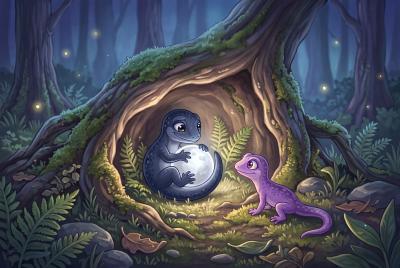
Lili and the Shadow Lizard
A hushed forest atmosphere carries this story, where small absences and differences in comfort create gentle uncertainty, longing, and curiosity. Across the chapters, the emotional movement stays thoughtful and contained, turning privacy, sensitivity, and hesitation into growing trust and companionship. Tension remains low throughout, shaped by searching, misattunement, and quiet waiting rather than danger. It offers a reflective bedtime experience with soft sensory detail, and it settles again and again into warmth, balance, and shared stillness.
Open story -
 6 chapters
Lili the Lizard
Across the story, a calm evening world is shaped by small disturbances that ask for patience, close attention, and gentle care. The emotional tone moves through worry, uncertainty, and moments of strain, but the tension stays moderate, grounded, and never threatening. Each part centers on noticing what is delicate or out of balance and meeting it with steadiness rather than force. The overall experience is soothing and quietly purposeful, settling again and again into relief, clarity, and a growing sense of trust.
Open story -
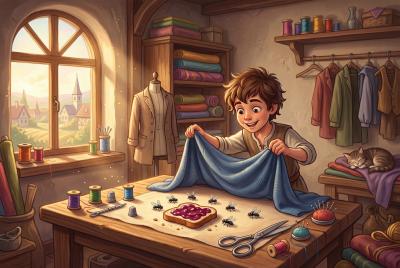
The Brave Little Tailor
A small boast opens into a playful tale of wit carrying someone far beyond his ordinary place. The mood is bright and amused, with mild suspense as size, reputation, and impossible tasks are tested in a classic fairy-tale world. Tension stays moderate and never frightening, since each challenge is met through quick thinking rather than force. It settles into a feeling of earned belonging, steadiness, and restored order.
Open story -

The Ugly Duckling
A gentle fairy tale of difference and belonging, carried by ponds, reeds, and the slow turning of the seasons. The mood is quiet and wistful, with loneliness held in soft, natural images rather than sharp conflict. Tension stays mild, shaped by distance, uncertainty, and the duckling’s search for a place to rest. It settles into a calm, luminous sense of recognition and emotional ease.
Open story -
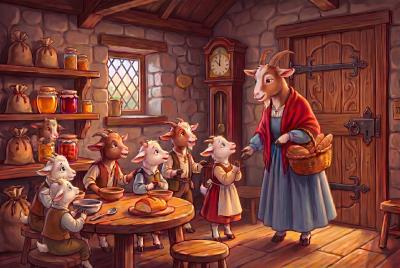
The Wolf and the Seven Young Goats
A traditional animal fairy tale, this keeps the familiar door-latch pattern of warning, deception, and return. The mood is calm and rhythmic, with household details and repeated signs giving the danger a contained, storybook distance. Tension stays soft but real as trust is tested and the family is briefly thrown out of balance. It settles into protection, repair, and the steady feeling of home restored.
Open story -
More to discover
Softly paced tales made for 8-year-old listeners.
Questions parents often ask
A few of the things worth knowing about bedtime stories at this age.
Sources & research notes
- American Academy of Pediatrics — Literacy Promotion — Guidance on shared reading, literacy development, parent-child connection, and language-rich interaction.
- HealthyChildren.org — 10 Tips to Help Your Child Fall in Love with Reading — Guidance on reading together before bedtime, discussing stories, asking what might happen next, and keeping reading enjoyable for school-age children.
- HealthyChildren.org — Your Checkup Checklist: 8 Years Old — Background on eight-year-old development, including logic, reasoning, problem-solving, responsibility, friendships, and growing independence.
- HealthyChildren.org — Sleep: How Many Hours Does Your Child Need? — Guidance on school-age sleep needs, screen-free wind-down time, and bedtime routines that support rest.
- OpenStax — Identity, Self-Concept, and Self-Esteem in Middle Childhood — Background on middle childhood development, including social comparison, self-esteem, peer awareness, and a growing sense of identity.
- HealthyChildren.org — Kids & Screen Time: The 5 C’s — Guidance on calming family routines, screen habits, and creating space for reading, connection, and rest.
These sources helped shape the developmental guidance on this page. Fiabalo stories are designed for calm bedtime moments, not as medical or developmental advice. Every child grows at their own pace. If you have concerns about your child’s sleep, development, or wellbeing, speak with a pediatrician or qualified professional.
Not quite the right age?
Age is only a guide. If your child needs something simpler or is ready for a little more, choose the stage that feels closest right now.
Tonight's story is ready
Calm bedtime stories for 8-year-olds — gentle enough for sleep, full enough to feel satisfying after a bigger day.
7-day free trial · No credit card required