Bedtime Stories for 9-Year-Olds
At nine, many children are ready for stories that feel richer, more layered, and more complete from beginning to end. Growing independence, deeper and more empathetic friendships, and the first signs of puberty all define this stage. Bedtime stories work especially well here when they feel substantial enough for a child who wants a real story, but still calm enough to help the day settle.
Reading together still matters at this age. Talking about the story and asking questions like "What do you think will happen next?" keeps bedtime connected. A predictable bedtime routine also helps children know what comes next and supports better sleep. School-aged children generally need 9 to 12 hours of sleep each night.
7-day free trial · No credit card required
What a good bedtime story feels like at nine
For a nine-year-old, a bedtime story can carry a little more emotional weight than before. A fox loses a lantern, follows the glow of distant windows, makes one wrong turn, notices something important he missed earlier, and finds his way home just as the whole garden goes quiet. A rabbit feels left out, keeps the feeling to herself for too long, finally speaks, and ends the night feeling safely included. A little bear insists he is not tired, then slowly softens into the stillness of the evening. There is a beginning, a stronger thread, and an ending that feels earned.
What makes it work at this age is not bigger intensity. It is a story with enough shape to feel satisfying, enough emotional clarity to feel meaningful, and an ending that lets the whole day settle.
What Nine-Year-Olds Bring to Story Time
At nine, many children are bringing more independence, more social awareness, and more of the outside world into bedtime. HealthyChildren's 9-year checkup guidance notes that children this age are building independence, developing solid friendships, and showing more empathy for others' feelings — while also beginning to communicate their own feelings more clearly.
More reflection
A nine-year-old is more likely to think about what a character felt, why they chose something, and whether it was fair, kind, or brave.
Longer story memory
Stories can now hold together across more scenes, callbacks, and emotional beats without losing the child.
A stronger peer world
Friendship, belonging, comparison, confidence, and social tension often matter more at this age.
A calm finish
Even with a fuller story, bedtime still works best when the ending lowers the energy of the room.
What Kind of Stories Work Best
The best bedtime stories for 9-year-olds usually have one clear plot, one emotional thread that is easy to follow, and a resolution that feels complete. This is a strong age for stories that feel like a true arc: something matters, something gets in the way, a small effort is made, and the story lands somewhere safe.
Because children this age are often thinking more about school, friendship, identity, and how they are seen by others, bedtime stories can carry a little more continuity and emotional meaning than they could at eight. That does not mean bedtime needs bigger stakes. It means the story can hold a little more depth while still staying emotionally safe.
This is also a strong age for stories that feel immersive without becoming overstimulating. A lantern-lit room, a moonlit village, a quiet animal household, a forest path under the stars, a friend waiting at the window — these can all feel rich now, as long as the story ends in warmth and rest.
Every child grows in their own way
Milestones are only gentle guides. Some children reach them early, some later, and many grow in small uneven steps. What matters most is meeting your child with patience, warmth, and trust in their own rhythm.
What Changes Between Eight and Nine
At eight, many children are reasoning through situations more clearly and paying more attention to peer dynamics. At nine, many are also becoming more aware of themselves inside those situations: how they compare, what they are good at, what other people think of them, and how relationships affect the way a day feels.
That changes what feels satisfying at bedtime. A story for a nine-year-old can carry a little more emotional and social meaning than a story for an eight-year-old, not because bedtime should get heavier, but because the child can now enjoy more reflection inside the story.
How self-concept shifts at this age
Around nine, many children undergo what researchers call a self-concept shift — moving from defining themselves through external traits to defining themselves through internal characteristics: what kind of friend they are, what they value, how they handle difficulty. That growing self-awareness can shape how they experience school, friendship, and confidence from day to day.
For bedtime stories, this matters in a practical way. A nine-year-old is not just following a character through events. They are also paying attention to what the character's choices say about who they are. Stories where a character acts with quiet courage, shows real kindness, makes a mistake and repairs it, or simply keeps going when things get hard often land especially well at this age.
Friendships deepen and become more complex
Children this age usually have solid friendships formed through school, sports, and neighborhood groups, and they are beginning to show more empathy for others' feelings and communicate their own more clearly. That depth of friendship also brings more complexity — more loyalty, more potential for hurt, and more of the day spent inside social dynamics that feel genuinely important.
A calm bedtime story that ends with a character feeling included, understood, forgiven, or quietly confident can offer reassurance in a softer form. It can help the day settle without requiring the child to explain everything directly.
What that means for the stories you choose
A good bedtime story for a nine-year-old often has a beginning, a middle, and an ending that feels emotionally complete. Something happens. A feeling deepens. A small choice matters. Then the story lands softly.
Think: a young owl promises to carry one tiny lantern home through the woods. The wind rises, the path turns, the light flickers, and she keeps going until she reaches the stillest branch in the tree. That is enough. The plot feels real, the feeling is easy to follow, and the ending helps the evening settle.
Why repetition still matters at this age
Repetition still helps at nine, but now it often brings comfort through familiarity, memory, and emotional certainty. A favorite story does not only feel good because it is known. It feels good because the child knows exactly where it will land.
That is why familiar bedtime stories can still work beautifully at this age. A story that ends in the same good place every time can be exactly what a school-age child needs at the end of a full day.
A calmer evening
Make tonight easier.
A gentle story shaped for nine-year-olds — meaningful enough to satisfy, calm enough to help the day end well.
Start free trial7-day free trial · No credit card required
Story Pacing for Nine-Year-Olds
The AAP recommends at least 15 minutes of reading aloud together each day as part of the bedtime routine, and specifically encourages reading before bedtime with school-age children. School-aged children generally need 9 to 12 hours of sleep each night — and at nine, homework, after-school activities, and social demands can all compress the evening quickly. A consistent bedtime story is one of the clearest signals that the day is ending.
At nine, that often means one fuller gentle story or two shorter ones, with enough space for one or two questions, a repeated line, and a slow ending. Stories with a clear, settled close tend to work better than anything that leaves feelings unresolved or energy raised. A child who has spent the day managing schoolwork, friendships, and how they are seen by others often needs bedtime to feel like a soft landing — not more input.
Many nine-year-olds are also becoming more private. They want to handle more on their own, and they share less about their day without being asked. Bedtime is often one of the last natural openings for easy, low-pressure connection — and a shared story creates that opening without requiring the child to perform or explain. Some evenings the story leads to a real conversation. Others it is simply a warm, quiet way to end the day together.
Long enough to feel complete
A nine-year-old can often enjoy a richer bedtime story arc when it stays emotionally clear and calm.
Clear enough to follow
A connected sequence helps the story feel satisfying instead of overstimulating.
Soft enough for sleep
Even a fuller story still needs to bring the energy of the room down, not raise it.
At nine, the best bedtime story often feels like a real story with a soft landing.
Bedtime Story Themes That Work at Nine
Themes that work especially well at nine often combine fuller plot with feelings and situations that match a child's growing world.
Friendship and belonging
A character notices, includes, returns, or makes room for someone else.
Fairness and different perspectives
A child this age often cares more about what is fair, what is kind, and why different people see things differently.
Confidence and self-belief
Stories where a character keeps going, finds their strength, or learns they are more capable than they thought.
Making a mistake and recovering
A character gets something wrong, feels it, and still arrives somewhere good.
Responsibility and growing independence
A character tries something on their own, makes a choice, or carries a small task through.
Soft adventure
A small journey, a clear goal, a calm return.
Feelings that resolve clearly
Worry, frustration, embarrassment, loneliness, pride, or hesitation that gently settles by the end.
Why Parents Choose Fiabalo for 9-Year-Olds
Parents of nine-year-olds are often balancing two bedtime needs at once: a child who wants a richer story and a day that may already feel full of school, friendships, comparison, and stimulation. That is exactly where the right story matters.
The AAP links shared reading to stronger parent-child attachment, early brain development, and the foundations of language and literacy — and specifically encourages bedtime reading for school-age children as quality time together at the end of the day.
Made for calmer evenings
Fiabalo stories are designed to guide the day downward, not wake it back up.
A better fit for this stage
More continuity, more meaning, still gentle enough for bedtime.
Read together or press play
Some evenings invite questions and shared reading. Others need something soft and ready.
Less bedtime friction
One calm story, already suited to the moment, helps reduce decision-making when everyone is tired.
At nine, bedtime often works best when the story feels both meaningful and restful. Fiabalo helps make space for both.
Ready to settle down
Stories shaped for 9-year-olds
Bedtime stories gently adapted for this age, with fuller plots, emotional depth, and calm endings.
-
 6 chapters
Jungle Tales
Across the jungle, this story holds a steady pattern of small disturbances, close observation, and trusted companionship. Worry, confusion, and brief frustration appear, but the emotional tone stays grounded, thoughtful, and emotionally safe rather than threatening. Its tension remains moderate, shaped by missing things, uncertain signs, and the need for patience. Again and again, the mood moves toward clarity, reassurance, and renewed order, making the overall experience calm, attentive, and gently settling.
Open story -
 5 chapters
Lili and the Shadow Lizard
A hushed forest atmosphere carries this story, where small absences and differences in comfort create gentle uncertainty, longing, and curiosity. Across the chapters, the emotional movement stays thoughtful and contained, turning privacy, sensitivity, and hesitation into growing trust and companionship. Tension remains low throughout, shaped by searching, misattunement, and quiet waiting rather than danger. It offers a reflective bedtime experience with soft sensory detail, and it settles again and again into warmth, balance, and shared stillness.
Open story -
 6 chapters
Lili the Lizard
Across the story, a calm evening world is shaped by small disturbances that ask for patience, close attention, and gentle care. The emotional tone moves through worry, uncertainty, and moments of strain, but the tension stays moderate, grounded, and never threatening. Each part centers on noticing what is delicate or out of balance and meeting it with steadiness rather than force. The overall experience is soothing and quietly purposeful, settling again and again into relief, clarity, and a growing sense of trust.
Open story -
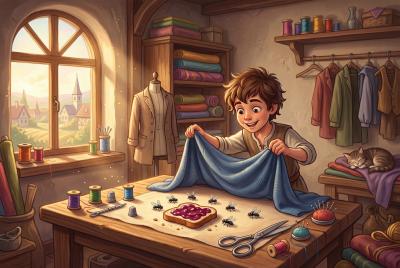
The Brave Little Tailor
A small boast opens into a playful tale of wit carrying someone far beyond his ordinary place. The mood is bright and amused, with mild suspense as size, reputation, and impossible tasks are tested in a classic fairy-tale world. Tension stays moderate and never frightening, since each challenge is met through quick thinking rather than force. It settles into a feeling of earned belonging, steadiness, and restored order.
Open story -

The Ugly Duckling
A gentle fairy tale of difference and belonging, carried by ponds, reeds, and the slow turning of the seasons. The mood is quiet and wistful, with loneliness held in soft, natural images rather than sharp conflict. Tension stays mild, shaped by distance, uncertainty, and the duckling’s search for a place to rest. It settles into a calm, luminous sense of recognition and emotional ease.
Open story -
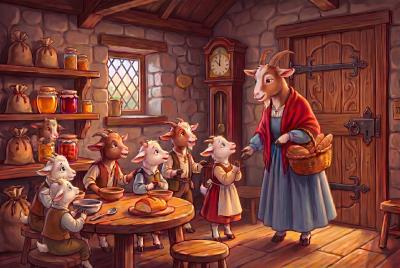
The Wolf and the Seven Young Goats
A traditional animal fairy tale, this keeps the familiar door-latch pattern of warning, deception, and return. The mood is calm and rhythmic, with household details and repeated signs giving the danger a contained, storybook distance. Tension stays soft but real as trust is tested and the family is briefly thrown out of balance. It settles into protection, repair, and the steady feeling of home restored.
Open story -
More to discover
Softly paced tales made for 9-year-old listeners.
Questions parents often ask
A few of the things worth knowing about bedtime stories at this age.
Sources & research notes
- American Academy of Pediatrics — Literacy Promotion — Guidance on shared reading, literacy development, parent-child connection, and language-rich interaction.
- HealthyChildren.org — 10 Tips to Help Your Child Fall in Love with Reading — Guidance on reading together before bedtime, discussing stories, asking what might happen next, and keeping reading connected to end-of-day family time.
- HealthyChildren.org — Your Checkup Checklist: 9 Years Old — Background on nine-year-old development, including independence, friendships, empathy, emotional communication, school, and early body changes.
- HealthyChildren.org — Sleep: How Many Hours Does Your Child Need? — Guidance on school-age sleep needs, screen-free wind-down time, and predictable bedtime habits.
- OpenStax — Identity, Self-Concept, and Self-Esteem in Middle Childhood — Background on how children in middle childhood develop self-concept, social comparison, self-esteem, and a more complex sense of who they are.
- NCBI Bookshelf — Self-Understanding and Self-Regulation in Middle Childhood — Research background on self-understanding, self-concept, self-regulation, and how children ages six to twelve think about themselves.
These sources helped shape the developmental guidance on this page. Fiabalo stories are designed for calm bedtime moments, not as medical or developmental advice. Every child grows at their own pace. If you have concerns about your child’s sleep, development, or wellbeing, speak with a pediatrician or qualified professional.
Not quite the right age?
Age is only a guide. If your child needs something simpler or is ready for a little more, choose the stage that feels closest right now.
Tonight's story is ready
Calm bedtime stories for 9-year-olds — gentle enough for sleep, full enough to feel satisfying after a bigger day.
7-day free trial · No credit card required