Why Is Bedtime Reading Important for Children?
Written by the Fiabalo Editorial Team · About the Fiabalo team
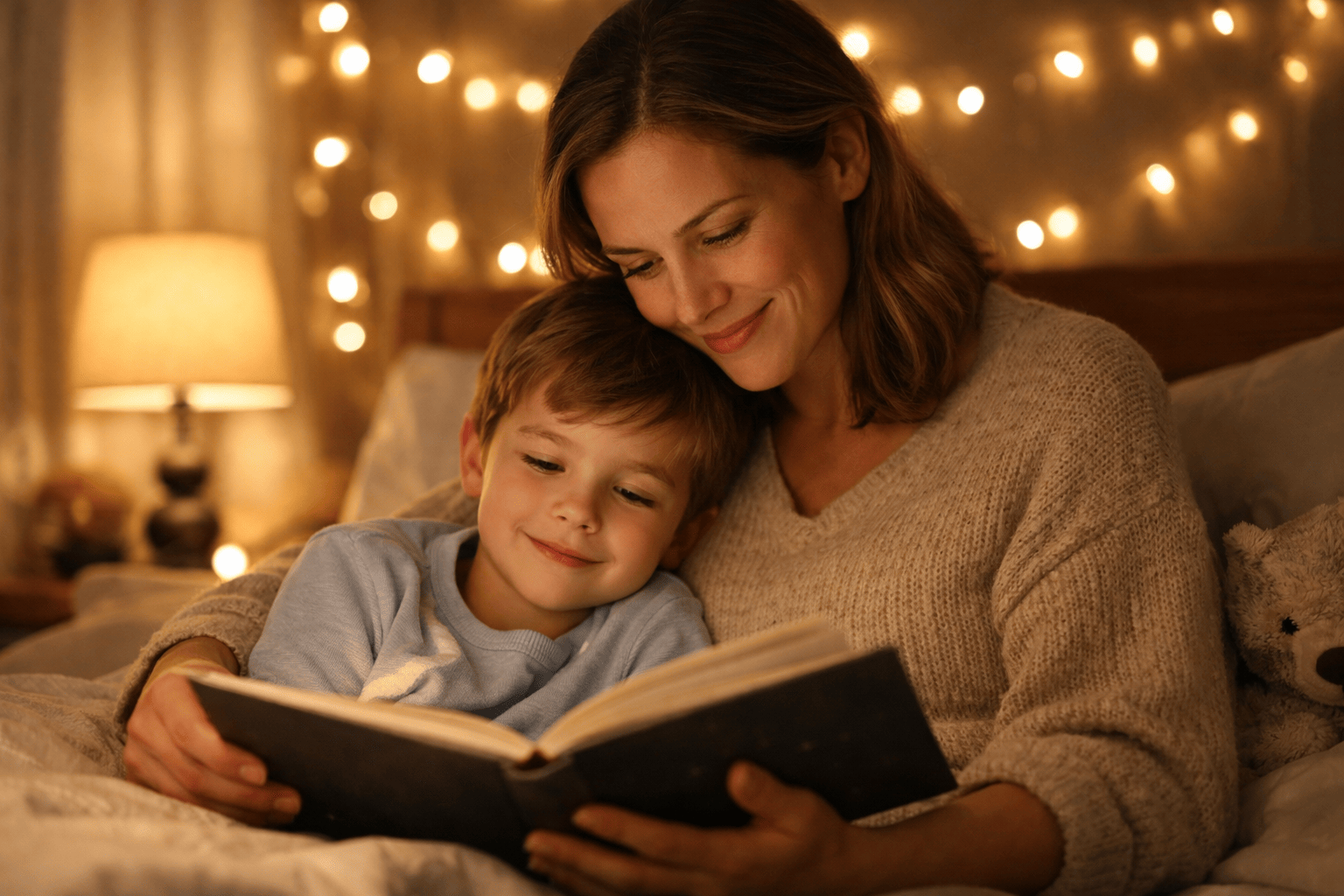
It's 8 PM. Your child is finally in pajamas — teeth brushed, water fetched, one last trip to the bathroom. You sit on the edge of the bed, open a story, and something shifts. The wiggly energy settles. The room gets quieter. For a few quiet minutes, it's just the two of you and a story.
That moment is more powerful than it feels.
Bedtime reading is one of the simplest things you can do for your child — and one of the most effective. Not because of any single magical benefit, but because it quietly supports so many areas of your child's development at once, night after night.
It builds your child's brain — literally
In the first years of life, the brain forms neural connections at an extraordinary pace. Every experience shapes which connections strengthen and which fade away. Storytelling is one of the richest experiences you can offer.
When your child listens to a story, their brain isn't just passively absorbing words. It's working hard — processing language, building memory, tracking characters, anticipating what happens next, and interpreting emotions. All at the same time. That's a serious workout for a developing mind, delivered in the gentlest possible way.
And the language children hear in stories is different from everyday conversation. It's more structured, more varied, more expressive. Stories introduce words and phrases your child might never encounter in daily life — and repeated exposure to this richer language helps build vocabulary, comprehension, and a natural sense of how language works.
It creates a feeling of safety
Children thrive on predictable rituals. When bedtime follows a familiar pattern — pajamas, story, sleep — it sends a clear signal: the day is ending, everything is okay, and rest is coming.
But it's not just the routine itself that matters. It's the quality of attention inside it. During a bedtime story, your child gets something rare in a busy day: your undivided presence. No phone, no multitasking, no rushing to the next thing. Just calm, focused connection.
That feeling of being fully seen and heard before sleep is deeply reassuring. It helps children let go of the day's anxieties and settle into rest with a sense of emotional security.
It teaches focus — without forcing it
In a world full of quick cuts, notifications, and instant stimulation, listening to a story is a quiet act of sustained attention. Your child learns to follow a narrative from beginning to end — to hold a thread, to wait for a resolution, to stay with something even when it's not instantly rewarding.
This isn't a skill you can teach directly. But it's one that grows naturally when a child is engaged in a story they care about. And it transfers — to school, to conversations, to everything that requires patience and focus.
It helps children understand emotions
Stories are safe spaces for big feelings. A character gets scared, feels lonely, makes a mistake, or faces something difficult — and then finds a way through. Your child experiences these emotions alongside the character, without any real-world stakes.
Over time, this builds emotional literacy. Children start to recognize feelings in themselves and others. They learn that challenges are normal, that difficult emotions pass, and that problems can be worked through. These are lessons that are hard to teach with words alone — but stories deliver them naturally.
It sparks imagination
When a child listens to a story, they build the entire world in their head. The forest, the castle, the dragon's voice, the color of the sky. Every detail is constructed by their own imagination.
This kind of internal visualization is a powerful form of creative thinking. It strengthens the ability to think in images, to invent scenarios, and to see possibilities beyond what's immediately visible. It's the foundation of creativity, problem-solving, and narrative thinking.
It helps your child fall asleep
A good bedtime story works like a gentle bridge between the active day and restful sleep. The pace slows. The voice softens. The world outside the story fades.
Unlike highly stimulating bedtime media, calm storytelling does the opposite. It lowers arousal, reduces stimulation, and creates the kind of quiet, safe engagement that naturally leads toward sleep.
This is why the tone and pace of a bedtime story matter just as much as the content. A calm, unhurried delivery is itself a sleep cue.
It builds a lifelong love of stories
When storytelling is associated with warmth, closeness, and comfort, children form a positive emotional connection with stories themselves. Reading doesn't become a chore or a school assignment — it becomes something that feels good.
This is one of the most lasting gifts bedtime reading can offer. Children who grow up with stories are more likely to become readers, thinkers, and people who turn to books and narratives throughout their lives.
It doesn't have to be perfect
Here's the part that matters most for busy parents: bedtime reading doesn't need to be long, elaborate, or perfectly executed.
Some nights you'll read three chapters. Other nights, you'll manage two pages before someone falls asleep. Some evenings you'll skip the book entirely and just tell a short story from memory. All of that counts.
Many children love hearing the same story over and over — and that's not just okay, it's beneficial. Familiar stories bring comfort, reinforce vocabulary, and give children the satisfaction of knowing what comes next.
What matters is the consistency of the ritual, not the perfection of any single night. A few calm minutes of storytelling, repeated regularly, can make a real difference in your child's development, sleep quality, and emotional well-being.
A few practical tips
Choose stories that match the moment. A calming story works better before sleep than an exciting adventure. Pay attention to how your child responds — the right story at the right time makes engagement effortless.
Slow down during emotional moments. When something important happens in the story, pause. Let it land. This teaches children that feelings deserve space.
Keep the rhythm familiar. Whether it's the same time, the same spot, or the same opening phrase — small consistencies help children settle faster.
End gently. A warm, quiet closing reinforces the feeling of safety. The last words your child hears before sleep should feel like a soft landing.
Bedtime stories don't have to come from a book
Reading aloud from a picture book is wonderful — but it's not the only way. Telling a story from memory, listening to a gentle audio story together, or sharing a calm narrated story through an app can all carry the same core benefits: language, connection, imagination, and calm.
What matters is the experience of storytelling — not the format.
Audio stories can be especially helpful on nights when you're exhausted, when a child wants a story but you've lost your voice, or when you want to offer a consistent, calming experience that your child can also enjoy independently as they grow.
The key is that the story is calm, age-appropriate, and part of a familiar bedtime rhythm.
Sources & research notes
- American Academy of Pediatrics — Literacy Promotion — Guidance on shared reading, language-rich interaction, early relationships, brain development, and the role of books in childhood.
- HealthyChildren.org — Brush, Book, Bed — Guidance on using books as part of a simple, predictable bedtime routine that helps children move toward sleep.
- Horst, Parsons & Bryan — Repetition and Word Learning from Storybooks — Research supporting the value of repeated storybook reading for vocabulary learning and the comfort of familiar stories.
These sources helped shape this guide. The suggestions are meant to support calmer bedtime moments, not replace medical or developmental advice. Every child is different. If sleep feels persistently difficult or worrying, it is always best to speak with a pediatrician or qualified professional.