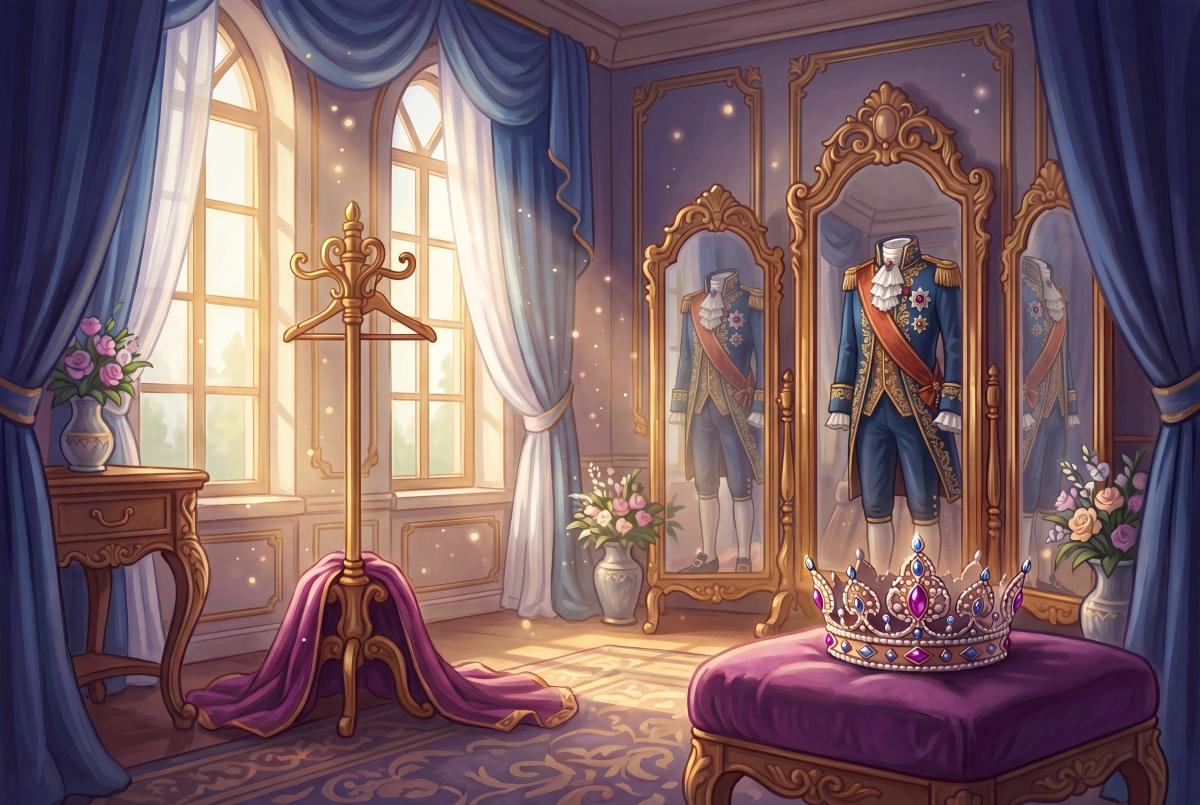
In that palace lived an emperor who cared for his clothes more than for hunting, more than for music, and almost more than for sleep. Each morning, servants opened carved chests and lifted out robes of velvet, coats sewn with silver thread, and cloaks lined with pale fur. The emperor would stand before three tall mirrors while his chamberlain named each color aloud, as if it were part of the day’s work.
One autumn afternoon, when the leaves in the palace court had turned the color of copper coins, two strangers came to the gate. They wore neat dark coats and carried smooth wooden cases under their arms. “We are weavers,” they told the guards, and soon they were led into the hall. There they bowed low and said they could make a cloth so rare that foolish people, and those unfit for their place, would not be able to see it at all.
The emperor lifted his head at once. Such cloth, he thought, would make the finest garments in the world. It would also show him who in his court was wise and who merely stood in a rich coat and said yes at the proper time. “Set up your looms,” he said. “Take silk, take gold thread, take what you need.”
So the two deceivers were given a bright room with high windows. They set up looms there and worked the treadles from morning until candlelight, though no thread crossed the frames. They asked for armfuls of …
 6 chapters